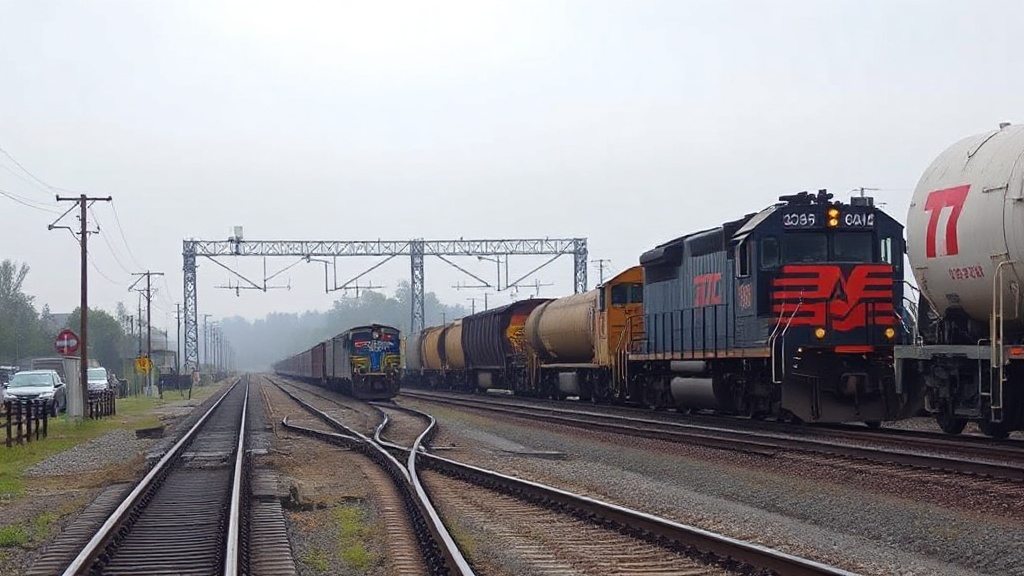
The Coverage That Surprises New Operators
When someone buys, leases, or launches a tourist or short-line railroad, they often assume worker injuries are handled the same way as at any other business: through state workers' compensation. They are usually wrong. Railroad employees are carved out of ordinary workers' comp in most situations and instead fall under a federal statute written specifically for railroaders — the Federal Employers Liability Act, or FELA. Understanding this difference is one of the most important things a heritage or short-line operator can do, because it changes both your legal exposure and the kind of insurance you need.
At Locomotive Insurance, a division of Contractors Choice Agency, we spend a lot of time explaining FELA to new operators. This article breaks down what it is, why it matters, and how a properly built railroad insurance program responds.
What FELA Actually Is
FELA, passed in 1908, was Congress's response to the extraordinary danger of early railroad work. Rather than create a no-fault benefit system like state workers' comp, FELA gives an injured railroad worker the right to sue the railroad for negligence. If the worker can show the railroad's negligence played even a small part in causing the injury, the railroad can be held liable.
Two features make FELA very different from workers' comp:
- It is fault-based. Workers' comp pays regardless of fault but caps benefits. FELA requires the worker to prove negligence — but if they do, damages are not capped on a fixed schedule.
- Damages can be large. A FELA verdict or settlement can include lost wages, future earning capacity, medical costs, and pain and suffering. There is no statutory benefit table limiting the number.
For a small heritage railroad, a single serious FELA claim can be a business-threatening event if it is uninsured or underinsured.
Who Counts as a "Railroad Employee"
The line between a FELA railroad employee and an ordinary workers'-comp employee is not always obvious, and it is exactly where operators get into trouble. Crew members operating or maintaining trains — engineers, conductors, brakemen, shop mechanics working on motive power — generally fall under FELA. Gift-shop clerks, café staff, and office workers usually do not.
The gray areas are real: a volunteer who runs the locomotive one weekend and sells tickets the next, a restoration mechanic who occasionally rides as crew, a maintenance-of-way worker. How these roles are classified affects which coverage responds, and a misclassification can leave a serious injury with no applicable policy. This is why we map out every role in an operation before structuring coverage.
Why Standard Carriers Won't Touch It
Most commercial insurers exclude railroad operations outright. Their standard general liability and workers'-comp forms were never designed to handle FELA's fault-based, uncapped exposure, the realities of operating rolling stock, or grade-crossing risk. When a general-business underwriter sees "railroad," the application is typically declined or referred to a specialty market. That is not the carrier being difficult — it is the recognition that railroad liability is a genuinely different animal that requires specialized underwriting and dedicated coverage forms.
How Railroad Liability Coverage Responds
A railroad insurance program built for a heritage or short-line operator addresses FELA exposure directly, alongside the other railroad-specific liabilities. The pieces typically include:
- FELA / railroad employee liability for negligence claims brought by your crew and operating personnel.
- Railroad general liability that does not contain the blanket railroad exclusion found in standard GL — so claims arising from track, rolling stock, and operations are actually covered.
- Crossing and right-of-way liability, because grade crossings are among the highest-severity exposures any railroad faces. A collision at a public crossing can involve catastrophic third-party injury claims.
- Coordination with ordinary workers' compensation for the non-railroad staff who are not subject to FELA.
The goal is a seamless program where every worker and every incident maps to a policy that responds, with no gap between the FELA world and the workers'-comp world.
Grade Crossings and Right-of-Way
FELA covers your workers, but your liability does not stop at the property line. Public and private grade crossings put your trains in contact with the motoring public, and a crossing accident can generate severe liability claims from non-employees. Right-of-way maintenance, signage, sight-line obligations, and crossing protection all factor into how an underwriter views your risk — and into the premium. Operators who document crossing safety and FRA-aligned practices generally present a stronger risk.
FRA Context and Documentation
The Federal Railroad Administration (FRA) sets the safety and operating standards many tourist and short-line railroads must follow, including equipment inspection, crew qualification, and operating rules. While FRA compliance is a regulatory obligation rather than an insurance product, it directly affects your insurability. Operators who keep clean inspection records, qualified crews, and documented safety programs are more attractive to specialty railroad markets and often see that reflected in terms.
Volunteers and FELA
Heritage railroads run on volunteers, and volunteer crew create a genuine FELA-adjacent question. Depending on how a volunteer engineer or shop mechanic is treated, they may or may not fall under FELA-style exposure, and they may need separate accident coverage. There is no one-size-fits-all answer — it depends on your structure, your operating agreements, and how the work is actually performed. This is precisely the kind of nuance that a railroad-focused agent should walk through with you.
Get It Reviewed by Someone Who Knows Railroads
FELA is the single biggest reason a generic business policy is dangerous for a railroad operator. If your current coverage was written by a carrier that "added a railroad endorsement" to a standard form, it is worth a second look. Call a Locomotive Insurance agent for a no-obligation review and quote, and we'll make sure your crew, your passengers, and your operation are actually protected the way the law requires.